

This year’s Mighty Mainframe Conference is shaped around two strong themes that keep appearing across the program: Modernization and zSkills. Together, they reflect the conversations that matter most in today’s mainframe world, from transformation and user experience to talent, AI, and long-term strategy.
Modernization
Modernization is one of the clearest threads running through this year’s conference, but it is not presented as a single formula for technical modernization journey. Instead, it appears as a broad and evolving conversation about how to rethink the platform while keeping its core strengths intact.
That idea is captured especially well in this year’s main conference theme, “15 (+1) Ways to Reinvent Mainframe Modernization,” led by Armin Kramer, Head of Mainframe at CROZ. Rather than treating modernization as a buzzword, this theme opens up space for many different interpretations of what meaningful change can actually look like.
Other sessions bring that conversation into very concrete territory. “Mainframe Masonry: Chipping Away At the Monolith” points toward steady, practical progress and the reality that transformation often happens piece by piece led by Joseph Westman. “Road to Success: Handelsbanken zDevOps Modernization,” presented by the power duo Amra Mulisic and Louise Wahlberg from Handelsbanken, adds the perspective of real DevOps transformation and what successful modernization looks like in practice.
The theme also stretches into user experience and security. In “Project Polaris: The Next Generation z/OS User Experience,” Fiona King from IBM brings focus to how the platform can evolve for the next generation of users. At the same time, Mark Wilson’s “Modernise… But Secure First: The Reality of Mainframe Transformation” grounds the entire discussion in a reality that cannot be ignored: progress only matters if it is secure.
And then there is “Hmmmm (How Much Mainframe Modernisation Matters)” by Henri Kuiper, which adds a more reflective note and reminds us that modernization is also something worth questioning, examining, and defining carefully.
zSkills
If modernization is about systems and transformation, zSkills is about the people who make that transformation possible.
This part of the program focuses on how knowledge is built, shared, and carried forward. It asks an important question that many in the industry are already thinking about: are we really preparing the next generation in the right way?
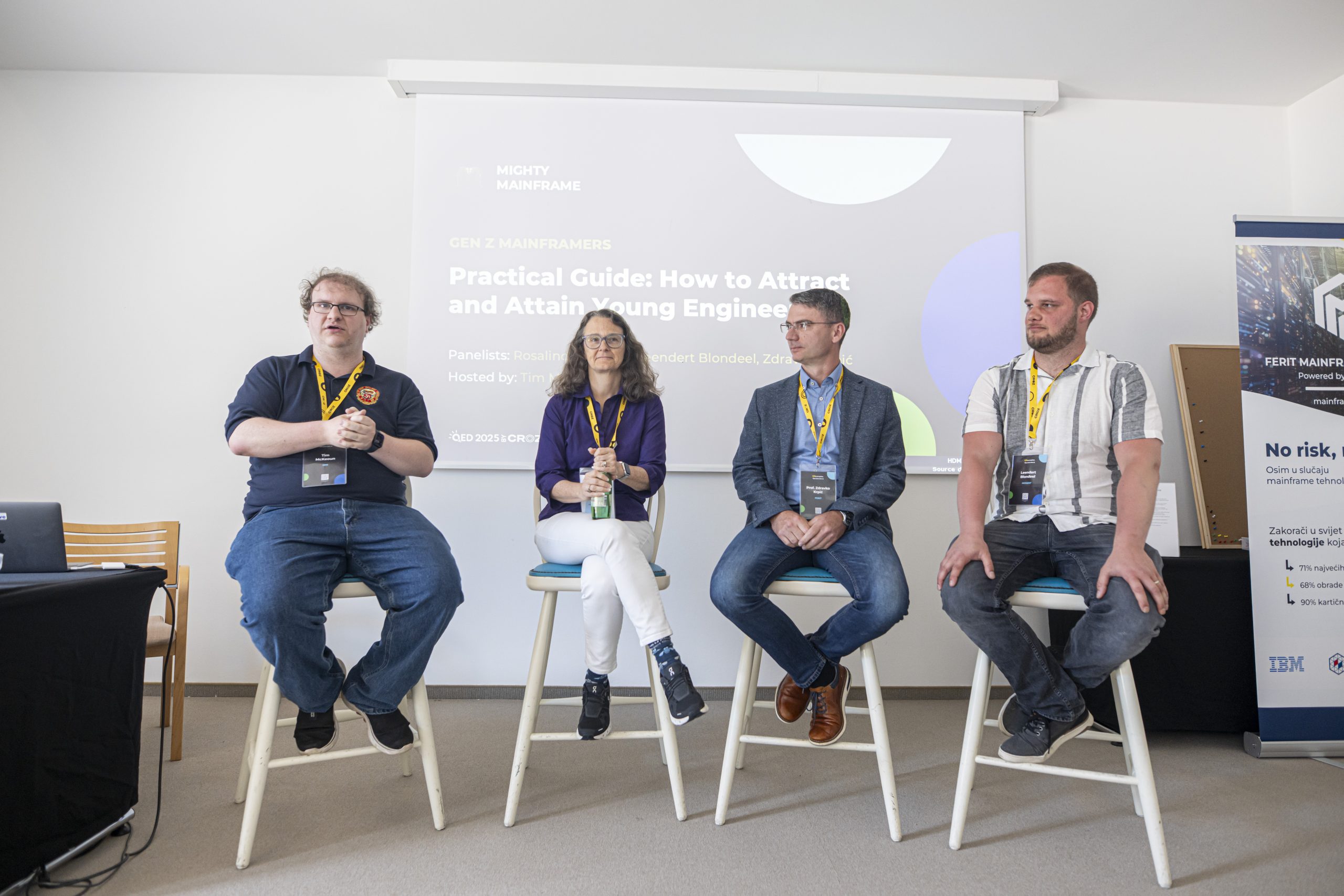
That question sits at the center of “Future of zSkills – Are We On the Same Page?” by Leendert Blondeel and Andrey V. Mitrev. It is a theme that feels especially relevant right now, as companies, communities, and educators all try to align around what future mainframe talent should look like.
There is also a fresh and very current angle in “COBOL, Coast and Copilots – An AI on Z Chat” by Tim McKeoun, Max Rautland, and Philipp Kremling. This session brings together traditional mainframe knowledge and the growing role of AI, showing that the future of zSkills is not about replacing experience, but about expanding what people can do with the right tools.
The community side is just as important. “Are We in Tune? – New 2 Z gathering powered by IBM zSkills team” points toward a more open and welcoming future, one where new talent is supported not only through formal learning, but through connection, collaboration, and a sense of belonging.
Strategy
We’re not big fans of strategy presentations you can take home and plug in as-is. Instead, we believe conference sessions should offer experience, perspective, and guidance from other experts—while you build your own strategy.
These sessions are less about specific tools and more about mindset, positioning, and long-term decisions. They explore how organizations can move beyond outdated narratives and think more clearly about what the platform represents today: not a legacy burden, but a serious strategic asset.
That conversation starts strongly with “The Mainframe Is Dead. Long Live the Mainframe.” by Martin Pluschke, a title that immediately challenges old assumptions and opens the door to a more thoughtful discussion about value, resilience, and the future of enterprise architecture.
It continues in the panel discussion “Defining Tomorrow’s Strategy, Today!” with Mirko Minnich, Rosalind Radcliffe, and Armin Kramer. Bringing together different strategic perspectives, this session speaks directly to one of the biggest questions in the industry right now: how do we define the place of the mainframe in a modern enterprise landscape without falling back on tired clichés?
Taken together, these two themes show a conference that is not only looking at technology, but at the bigger picture around it. Mighty Mainframe 2026 is exploring how the platform evolves, how people grow with it, and how strategy can give that evolution real direction.
That is what makes this year’s program particularly relevant. It is not simply about technical modernization while preserving existing applications and data. Mainframe modernization is no longer just exposing legacy 3270 screens to the web. Instead, it is about understanding the future shape of enterprise systems. We are currently witnessing dramatic changes driven by AI-powered tools, which are already redefining the software development lifecycle. In this context, the mainframe must not remain an island, but an integrated and evolving part of the modern enterprise architecture.